WHY MAKE IT
A little comfort, a lot of flavor.
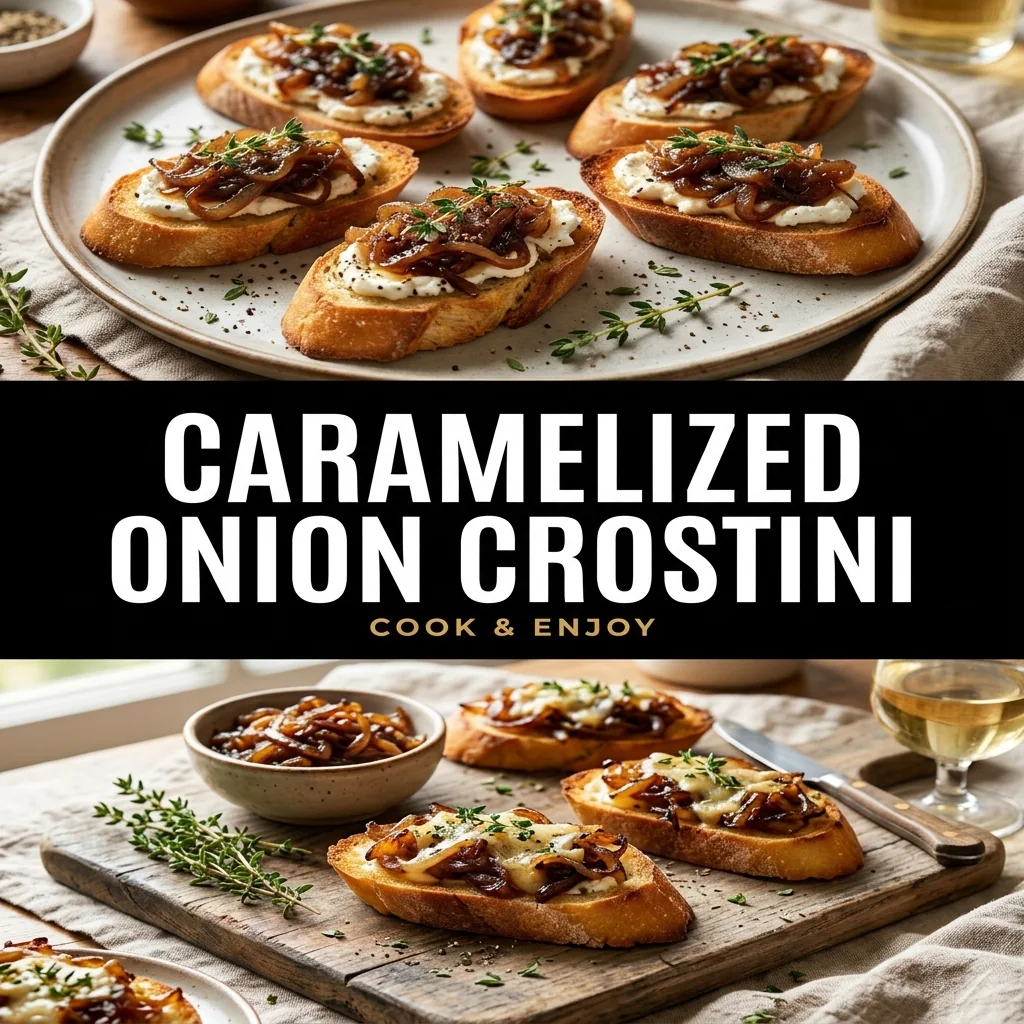
Caramelized onion crostini offer a classic French-inspired combination of flavors, marrying deeply browned, sweet alliums with the bright tang of fresh goat cheese. True caramelization breaks down the natural sugars within the yellow onions over prolonged gentle heat, transforming sharp, pungent slices into a soft, savory jam. Paired with a sturdy toasted artisan baguette, the velvety chèvre provides an acidic counterpoint that balances the richness of the butter and olive oil. Accented with woodsy fresh thyme and a measured trace of floral honey, these bite-sized toasts provide an elegant appetizer suitable for cocktail hours, celebratory dinners, or wine tastings. They provide a refined, restaurant-quality presentation while relying on budget-friendly staples.
Mastering the Caramelization Process
True caramelized onions require continuous low thermal contact to trigger the Maillard reaction without burning the natural sugars. Adding salt early draws out cellular water, allowing the onions to soften thoroughly before browning begins. If your skillet develops a dark layer of residue, known as fond, do not let it blacken. Immediately deglaze the skillet with one to two tablespoons of water, wine, or broth, scraping up those flavorful browned solids so they reincorporate back into the softening onion strands for deeper complexity.
Bread Selection and Crostini Prep
A traditional French baguette with a tight crumb structure produces the sturdiest crostini base. Slice the bread on a gentle diagonal into half-inch rounds to maximize the surface area for the goat cheese and onions. Slicing too thin results in fragile crackers that shatter under the weight of the warm toppings, while excessively thick slices become overly chewy. A brief bake at 400°F (204°C) crisps the exterior while keeping the crumb firm enough to resist moisture from the warm caramelized onions.
Balancing Flavor and Temperature
The success of this crostini hinges on temperature and ingredient equilibrium. Allowing the goat cheese to sit at room temperature for fifteen minutes before assembly makes spreading smooth without tearing the crisp bread. Applying warm caramelized onions directly over the cool chèvre gently softens the cheese, creating a luscious texture without liquefying it. The final touch of aged balsamic vinegar cooked into the onions adds necessary acidity, cutting the heavy natural sweetness and complementing the dry, earthy freshness of garden thyme.
Before you start
Caramelization is an exercise in patience that cannot be accelerated by turning up the stove heat. High heat burns the onion sugars before they break down, resulting in bitter charred strands rather than rich sweetness. Maintain medium-low heat and deglaze the bottom of the pan with small splashes of water whenever fond accumulates. Slicing onions evenly ensures they cook uniformly without leaving undercooked or overly browned sections.
THE RECIPE
Caramelized Onion Crostini
8 servings · 15 minutes preparation · 50 minutes cooking · 5 minutes cooling, chilling or resting
Ingredients
Step-by-step instructions
- Heat a large 12-inch heavy-bottomed skillet or Dutch oven over medium heat. Add 1 tablespoon olive oil and the unsalted butter, swirling until the butter melts and foam subsides.
- Add the sliced yellow onions and 0.75 teaspoon kosher salt to the skillet. Cook for 10 minutes, stirring occasionally, until the onions soften, collapse in volume, and begin to release moisture.
- Reduce heat to medium-low. Cook the onions slowly for 30 to 35 minutes, stirring every 3 to 4 minutes and scraping the pan bottom. If the onions begin to scorch, stir in a splash of water. The onions are done when deep amber, silky, and sweet.
- Stir the fresh thyme leaves and balsamic vinegar into the caramelized onions. Cook for an additional 2 minutes until the liquid evaporates, then remove the pan from heat and allow the onions to cool for 5 minutes.
- Preheat the oven to 400°F (204°C). Arrange the 24 baguette slices in a single layer across a large rimmed baking sheet. Brush the top surfaces evenly with the remaining 1 tablespoon of olive oil and season with 0.25 teaspoon salt and black pepper.
- Bake the bread rounds for 6 to 8 minutes until the edges are light golden and crisp to the touch, while retaining a slight give in the center.
- Spread approximately one twenty-fourth of the goat cheese across each warm toasted crostini. Top each crostini with one twenty-fourth of the caramelized onions, a tiny drizzle of clover honey, and extra thyme garnish before serving.
Kitchen notes
Caramelization is an exercise in patience that cannot be accelerated by turning up the stove heat. High heat burns the onion sugars before they break down, resulting in bitter charred strands rather than rich sweetness. Maintain medium-low heat and deglaze the bottom of the pan with small splashes of water whenever fond accumulates. Slicing onions evenly ensures they cook uniformly without leaving undercooked or overly browned sections.
Storage & make-ahead
Store leftover caramelized onions separately from the toasted bread in an airtight container in the refrigerator for up to 4 days. Crostini toasts can be kept in a sealed container at room temperature for 2 days. When assembling leftovers, reheat the onions in a skillet until they reach 165°F (74°C) before spooning over freshly toasted baguette rounds. Refrigerate any perishable goat cheese toppings within 2 hours. In hot conditions above 90°F (32°C), refrigerate perishable food within 1 hour.
An original recipe guide inspired by themes in our Pinterest research. Recipe has not been independently kitchen-tested. AI-generated image is illustrative; your finished dish may look different.
Frequently asked questions
Can I prepare the caramelized onions in advance?
Yes, you can cook the caramelized onions up to 3 days ahead. Cool in a shallow container and refrigerate within 2 hours; store in a sealed glass container in the refrigerator, and reheat gently in a skillet until warmed to 165°F (74°C) just before assembling your crostini.
What cheese can I use if I dislike goat cheese?
Whole-milk ricotta, cream cheese, or creamy French brie make excellent substitutes. For a sharper profile, spread a layer of whipped gorgonzola or melted Gruyère directly onto the toasted crostini before piling on the warm onions.
Why did my baguette toasts turn rock-hard after baking?
Overbaking dries out the crumb entirely. Bake the rounds only until the edges turn golden and crisp, which takes roughly 6 to 8 minutes at 400°F (204°C). The bread will firm up further as it cools on the tray.