WHY MAKE IT
A little comfort, a lot of flavor.
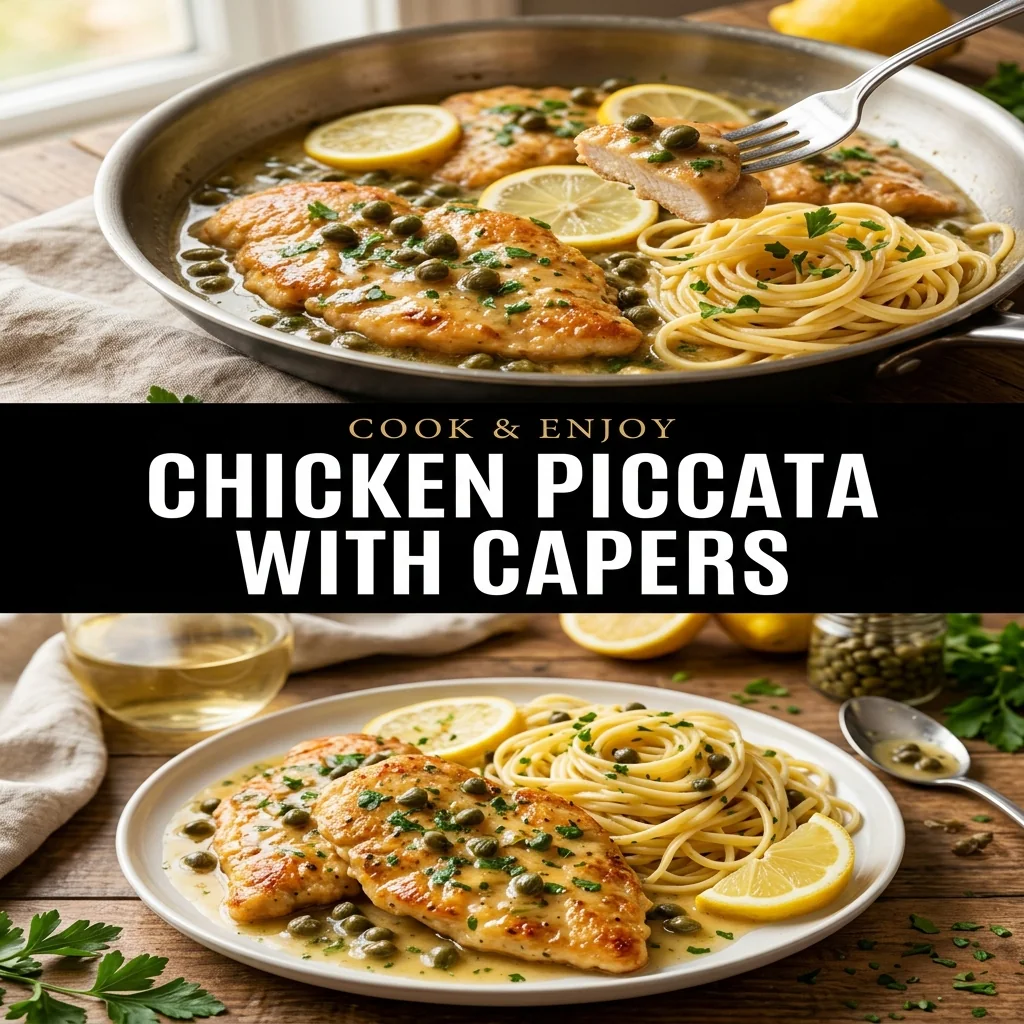
Chicken piccata remains one of the culinary world's most enduring restaurant staples because it delivers maximum brightness and sophistication in fifteen minutes of stove time. Thinly pounded cutlets take on a delicate flour crust that quickly browns in hot fat, creating an ideal foundation to bind the pan sauce. As dry white wine and strained lemon juice deglaze the skillet, they lift deeply flavorful poultry fond from the bottom. Briny capers lend sharp bursts of salt and vinegar that cut through the richness of mounting butter. The result is a vibrant, velvety sauce that envelops each tender bite. Whether paired with al dente pasta or crisp greens, this dish brings bright Italian-American flair to any weeknight dinner table.
Dredging and Searing Thin Cutlets
The texture of authentic chicken piccata relies on uniform cutlet thickness and light dredging. Pounding breasts between parchment sheets ensures the meat cooks in mere minutes without overcooking the outer layers. Flour acts as a protective shield, trapping interior moisture while generating a delicate, golden crust. Shaking off excess flour is vital; excess loose flour in the skillet burns in hot oil and clouds the finished pan sauce. Searing quickly over medium-high heat seals in juices and produces flavorful browned fond that dissolves into the deglazing liquid to build sauce body.
Emulsifying the Lemon-Caper Pan Sauce
Deglazing the pan with crisp white wine and chicken broth harnesses the concentrated fond left behind by the dredged chicken. Simmering reduces the liquid volume, concentrating acidity and fruit aromatics. Adding cold unsalted butter at the very end—a technique known as monter au beurre—suspends fat droplets within the acidic broth, creating an opaque, velvety sauce with gentle body. Keep the heat moderate while swirling the butter; excessive heat will cause the dairy fat to split, turning the sauce oily. Rinsed capers contribute brine without overpowering the fresh citrus notes.
Pairings and Presentation Nuance
Chicken piccata is traditionally served alongside buttered angel hair pasta, linguine, or creamy polenta, all of which absorb the tart lemon-caper reduction beautifully. For a lower-starch accompaniment, pair the cutlets with sautéed garlic baby spinach, grilled artichoke hearts, or steamed broccolini. When plating, position the cutlet flat on warmed dishes, arrange capers evenly across the meat, and ladle the glossy sauce over the center. A shower of fresh flat-leaf parsley and thin lemon wheels provides fresh contrast, highlighting the bright, cheerful Mediterranean aesthetic of the dish.
Before you start
Pounding cutlets to a uniform quarter-inch thickness ensures rapid, even cooking so the poultry stays juicy while developing a golden crust. Rinsing capers in cold water removes excessive surface brine, keeping the sauce savory rather than unpleasantly salty. For an ultra-glossy pan sauce, remove the skillet momentarily from the heat when whisking in the final tablespoon of butter, allowing the cold fat to melt gradually and emulsify instead of separating into grease.
THE RECIPE
Chicken Piccata with Capers
4 servings · 15 minutes preparation · 20 minutes cooking · 5 minutes cooling, chilling or resting
Ingredients
Step-by-step instructions
- Pat pounded chicken cutlets dry with paper towels. Season both sides evenly with 0.5 teaspoon kosher salt and 0.5 teaspoon black pepper, then dredge each piece lightly through all-purpose flour spread on a wide plate, shaking off excess coating.
- Heat 2 tablespoons olive oil and 1 tablespoon unsalted butter in a 12-inch stainless steel skillet over medium-high heat until the butter foams and settles.
- Place cutlets in the skillet in a single layer without overlapping, cooking in two batches if necessary. Sear undisturbed for 2 to 3 minutes per side until crisp and golden brown; transfer cutlets to a warm plate.
- Lower skillet heat to medium, add minced garlic, and stir for 30 seconds until fragrant without browning. Pour in the dry white wine, scraping the pan floor vigorously with a wooden spoon to dissolve browned fond.
- Add the chicken broth, fresh lemon juice, rinsed capers, and remaining 0.25 teaspoon salt. Bring the liquid to a brisk simmer for 3 to 4 minutes until reduced by half.
- Swirl the remaining 1 tablespoon cold unsalted butter into the bubbling sauce until emulsified and glossy. Return cutlets to the pan for 1 to 2 minutes, turning once, until an instant-read thermometer reads 165 F (74 C).
- Remove the skillet from heat and let the cutlets rest in the pan for 3 to 5 minutes. Sprinkle fresh flat-leaf parsley over the top and spoon the caper pan sauce generously over each portion to serve.
Kitchen notes
Pounding cutlets to a uniform quarter-inch thickness ensures rapid, even cooking so the poultry stays juicy while developing a golden crust. Rinsing capers in cold water removes excessive surface brine, keeping the sauce savory rather than unpleasantly salty. For an ultra-glossy pan sauce, remove the skillet momentarily from the heat when whisking in the final tablespoon of butter, allowing the cold fat to melt gradually and emulsify instead of separating into grease.
Storage & make-ahead
Store cooled leftovers in an airtight container in the refrigerator within 2 hours of cooking for up to 3 days. Reheat gently in a skillet over low heat with an extra splash of chicken broth until the internal temperature reaches 165 F (74 C). Microwaving can toughen delicate cutlets and break the butter emulsion. Freezing is not recommended because the flour coating and emulsified lemon-butter sauce tend to separate upon thawing.
An original recipe guide inspired by themes in our Pinterest research. Recipe has not been independently kitchen-tested. AI-generated image is illustrative; your finished dish may look different.
Frequently asked questions
Can I make chicken piccata without alcohol?
Yes, you can replace the dry white wine with an equal quantity of low-sodium chicken broth plus an extra teaspoon of fresh lemon juice to replicate the wine's natural acidity and volume without alcohol.
Why did my sauce separate and turn greasy?
Pan sauces separate when butter is added to boiling liquid over high heat. Remove the skillet from heat or drop the temperature to low before swirling in cold butter, which allows the emulsion to form smoothly.
How do I keep the chicken crispy once sauced?
The coating softens in sauce. For a crisper result, cook each cutlet fully to 165 F (74 C) during searing, then spoon the finished lemon-caper sauce over the chicken immediately before serving.