WHY MAKE IT
A little comfort, a lot of flavor.
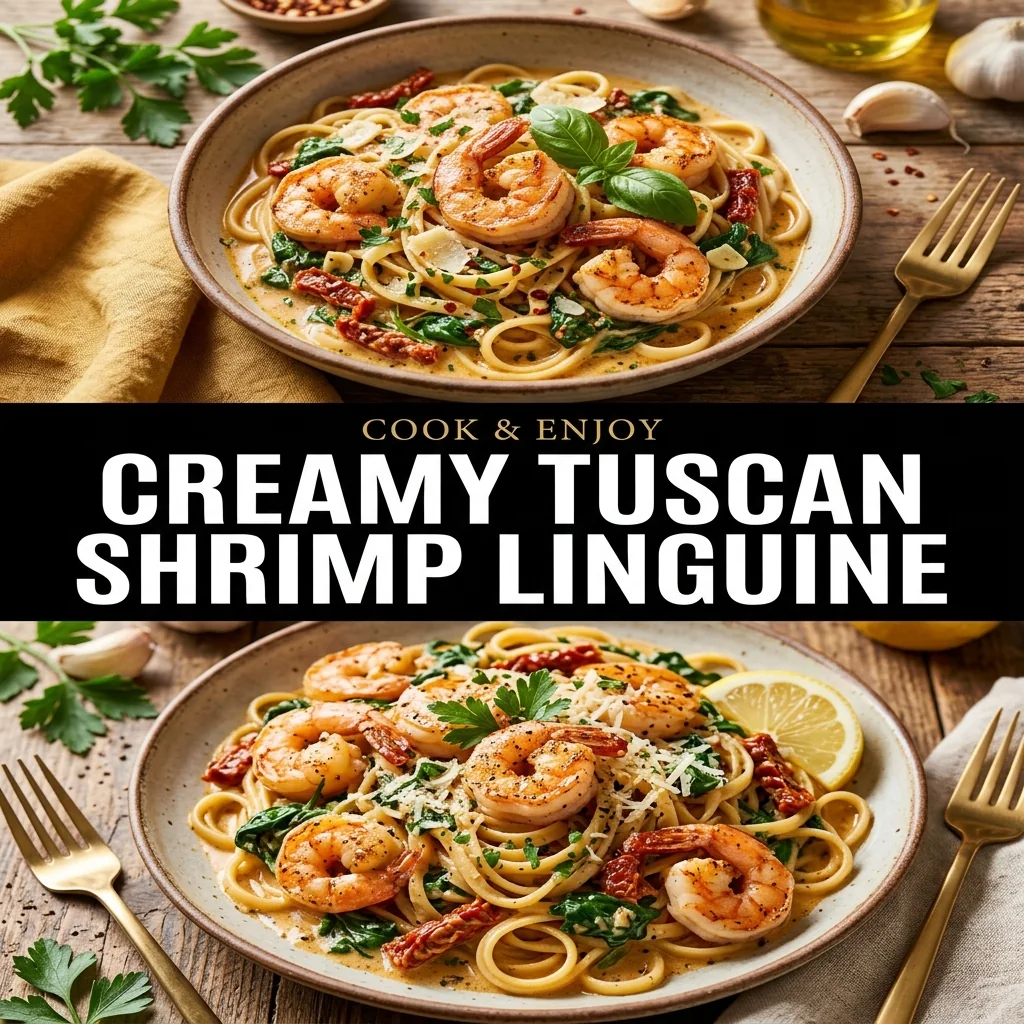
Creamy Tuscan shrimp linguine combines ocean sweetness with the robust, savory warmth of Mediterranean pantry staples. While traditional Italian coastal cookery often avoids pairing dairy with seafood, modern Tuscan-style skillet recipes celebrate the union of heavy cream, sweet sun-dried tomatoes, and verdant baby spinach. The key to mastering this dish lies in precision searing: shrimp cook rapidly, turning rubbery if left in a simmering skillet too long. By searing the shellfish separately over direct medium-high heat and reintroducing them only after building an emulsion of cream, chicken stock, and grated Parmesan cheese, each tender bite retains its succulent snap. Served over long ribbons of linguine that cling to the garlic-infused sauce, this dish offers restaurant-level indulgence within thirty-five minutes.
Selecting and Preparing the Shrimp
Selecting large raw shrimp, preferably in the 21/25 per pound range, provides substantial texture that will not get lost amidst rich cream and sturdy pasta. Thaw frozen shrimp submerged in cold water rather than warm water or the microwave to preserve muscle structure. Thoroughly patting the shrimp dry with clean paper towels before cooking is critical; excess surface moisture generates steam, preventing that golden exterior fond from developing in the pan. Avoid purchasing pre-cooked shrimp, as reheating them toughens the protein and deprives your sauce of the flavorful fond left behind in the skillet.
Building a Stable Cream Emulsion
A luscious sauce requires balancing dairy fat with pan deglazing liquid and starchy water. Heavy cream containing at least 36 percent milkfat resists curdling when brought to a gentle simmer with acidic sun-dried tomatoes and hot broth. Maintain a medium-low flame once the cream enters the skillet; aggressive boiling risks breaking the emulsion into an unappealing oily sheen. Stirring freshly grated Parmigiano-Reggiano into hot cream off direct high heat allows the proteins to melt gradually. If the sauce thickens excessively before serving, reserved pasta cooking water swiftly restores a glossy, silky coating across the strands.
Balancing Flavor and Finishing
Oil-packed sun-dried tomatoes provide intense sweet-tart acidity that cuts right through rich heavy cream. Draining them thoroughly prevents superfluous preserving oil from diluting the butter-and-olive-oil foundation. Slicing the tomatoes into thin strips distributes their chew evenly across the linguine. A measured pinch of crushed red pepper flakes introduces subtle background warmth rather than overt heat, while fresh Italian flat-leaf parsley added right before serving imparts a grassy freshness that enlivens the palate. Serve the finished pasta immediately on pre-warmed shallow bowls to keep the dairy sauce fluid and appealing from first bite to last.
Before you start
Always grate whole blocks of Parmesan cheese with a microplane or fine box grater rather than purchasing pre-shredded varieties. Commercial bagged cheeses contain anti-caking starches like cellulose that impede uniform melting, leading to a gritty or clumpy sauce. Additionally, monitor shrimp closely with an instant-read thermometer to avoid exceeding 145 F (63 C). Residual heat continues cooking the seafood after removal from the skillet, so transferring the shrimp to an unheated plate preserves their tender, juicy texture until final assembly.
THE RECIPE
Creamy Tuscan Shrimp Linguine
4 servings · 15 minutes preparation · 20 minutes cooking
Ingredients
Step-by-step instructions
- Bring 4 quarts of generously salted water to a rolling boil in an 8-quart stockpot over high heat. Add the linguine and cook for 9 to 10 minutes until just al dente. Reserve 1/2 cup of starchy pasta water, then drain the pasta in a colander and set aside.
- Pat the peeled and deveined shrimp thoroughly dry with paper towels to ensure browning, then season evenly with 1/4 teaspoon salt and 1/8 teaspoon black pepper. Heat 1 tablespoon olive oil and 1 tablespoon butter in a 12-inch stainless steel or enameled cast-iron skillet over medium-high heat.
- Arrange the seasoned shrimp in a single layer in the hot skillet. Sear undisturbed for 90 seconds, then flip and cook for another 60 to 90 seconds until pink, opaque, and registered at an internal temperature of 145 F (63 C). Immediately transfer the shrimp to a clean plate.
- Reduce skillet heat to medium. Add the remaining 1 tablespoon olive oil, 1 tablespoon butter, minced garlic, sliced sun-dried tomatoes, and crushed red pepper flakes. Sauté for 1 to 2 minutes, stirring constantly until the garlic turns fragrant and pale golden without scorching or turning bitter.
- Pour the chicken broth and heavy cream into the skillet, stirring with a wooden spoon to deglaze and release any browned bits stuck to the pan bottom. Bring the sauce to a gentle simmer over medium-low heat and cook for 3 to 4 minutes until slightly thickened.
- Stir in the grated Parmesan cheese until completely melted and smooth. Add the baby spinach and cook for 1 to 2 minutes, stirring frequently, until the leaves wilt into the cream. Season the sauce with the remaining 1/4 teaspoon salt and 1/8 teaspoon black pepper.
- Transfer the drained linguine and cooked shrimp into the skillet. Toss continuously with tongs over low heat for 1 to 2 minutes until the pasta is thoroughly coated and piping hot, splashing in reserved pasta cooking water by tablespoons if the sauce needs loosening. Garnish with chopped parsley.
Kitchen notes
Always grate whole blocks of Parmesan cheese with a microplane or fine box grater rather than purchasing pre-shredded varieties. Commercial bagged cheeses contain anti-caking starches like cellulose that impede uniform melting, leading to a gritty or clumpy sauce. Additionally, monitor shrimp closely with an instant-read thermometer to avoid exceeding 145 F (63 C). Residual heat continues cooking the seafood after removal from the skillet, so transferring the shrimp to an unheated plate preserves their tender, juicy texture until final assembly.
Storage & make-ahead
Cool leftovers quickly and seal in an airtight glass or plastic container within 2 hours of cooking. Store in the refrigerator for up to 2 days; seafood quality diminishes quickly. To reheat safely, warm in a nonstick skillet over medium-low heat with a splash of chicken broth or whole milk, stirring gently until the pasta and shrimp register an internal temperature of at least 165 F (74 C). Avoid microwave reheating at full power, which hardens shrimp proteins and breaks the cream sauce.
An original recipe guide inspired by themes in our Pinterest research. Recipe has not been independently kitchen-tested. AI-generated image is illustrative; your finished dish may look different.
Frequently asked questions
Can I use half-and-half instead of heavy cream?
Half-and-half contains significantly less milkfat, making it prone to curdling when simmered with acidic sun-dried tomatoes. If using half-and-half, temper it carefully by whisking in a teaspoon of cornstarch before heating, keeping the burner strictly on low heat to prevent separation.
What pasta shapes work best if I do not have linguine?
Fettuccine, tagliatelle, or pappardelle are excellent direct substitutes because their flat surfaces carry the rich cream sauce effectively. Alternatively, short tubular shapes like penne rigate or rigatoni trap the bits of minced garlic and sun-dried tomatoes inside their ridges.
Can I use frozen spinach instead of fresh baby spinach?
Yes, you can substitute 6 ounces of thawed frozen spinach. Be sure to squeeze out all excess moisture in a clean kitchen towel before adding it to the cream; otherwise, the trapped liquid will thin and discolor the sauce into an unappealing dull gray.