WHY MAKE IT
A little comfort, a lot of flavor.
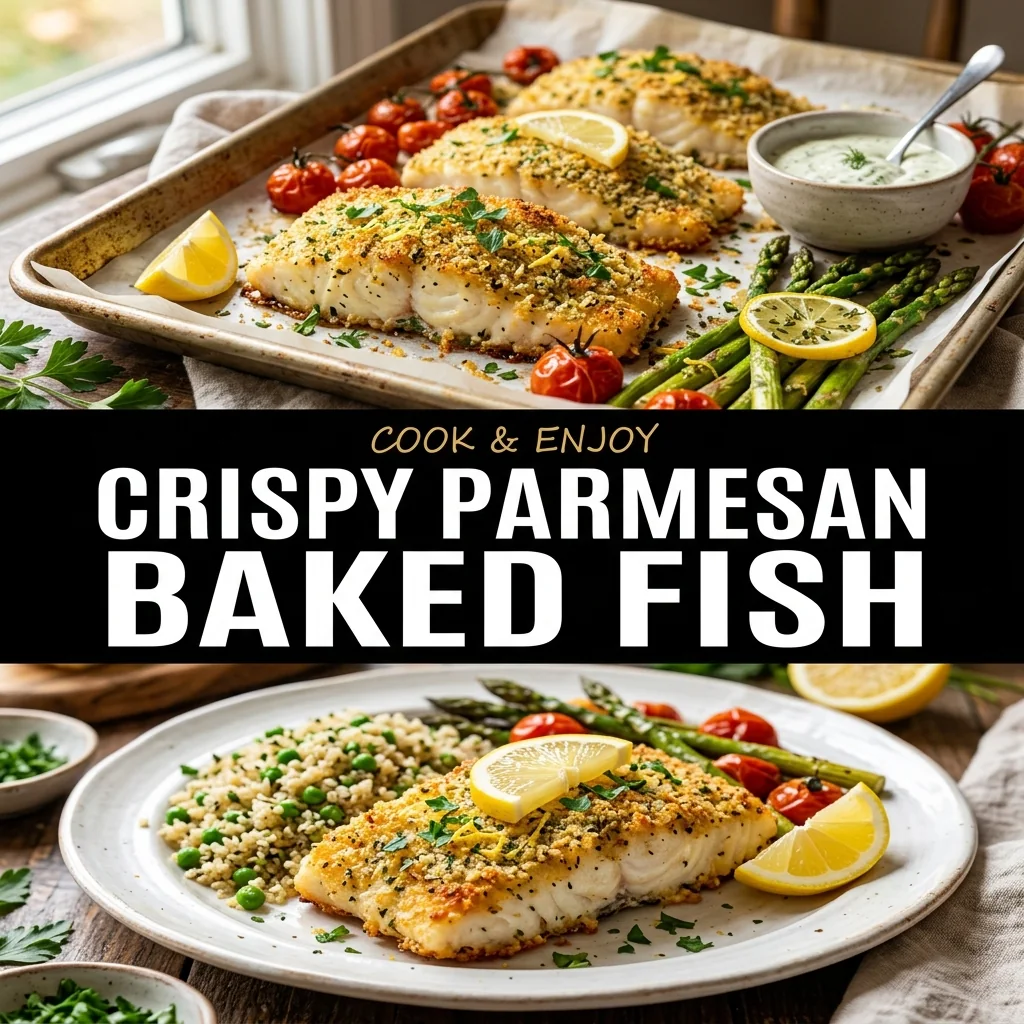
Crispy Parmesan baked fish provides the satisfying crunch of traditional fried fish with the convenience and clean execution of high-temperature sheet pan baking. Firm white fish fillets such as cod, haddock, or halibut offer a mild, naturally sweet foundation that complements the savory bite of aged Parmesan cheese and the brightness of fresh lemon zest. By binding Japanese panko breadcrumbs with a blend of melted butter and olive oil, the topping crisps efficiently in the oven’s convective heat while sealing in moisture beneath the crust. This technique eliminates splattering oil while ensuring the fish remains succulent and tender. Paired with roasted potatoes or a peppery arugula salad, this versatile recipe makes restaurant-caliber seafood achievable on any regular weeknight.
Selecting the Right Fish
Thick, sturdy white fish fillets work best for oven baking under a breadcrumb crust. Pacific or Atlantic cod, haddock, pollock, and halibut maintain structural integrity when topped with a dense layer of panko and cheese. Thinner flatfish such as sole or flounder tend to cook through too quickly before the breadcrumbs turn golden, leading to mushy fish or pale toppings. Look for fillets that are uniform in thickness from end to end, with bright, translucent white flesh and a fresh, oceanic scent. If using frozen fillets, thaw them completely and press out excess moisture.
Mastering the Panko Crust
Panko breadcrumbs are made from crustless bread processed into light, airy flakes that resist sogginess far better than standard breadcrumbs. Tossing panko with both melted butter and olive oil provides two distinct benefits: butter brings rich browning flavor, while olive oil raises the smoke point and aids crunch. Fresh lemon zest grated directly into the breadcrumb mixture distributes citrus essential oils throughout the crust without adding water that could soften the panko. Pressing the crust firmly onto the fish before baking ensures it remains adhered during cooking and plating.
Temperature and Doneness Cues
Baking fish at 425°F (218°C) provides the thermal energy required to brown the breadcrumb mixture in the same window of time it takes the fish to cook through. White fish flesh turns opaque and separates easily into distinct flakes along its natural muscle segments when done. Use an instant-read digital thermometer inserted into the thickest part of the fillet; it must reach 145°F (63°C). If the crust browns too rapidly before the center reaches temperature, loosely drape a sheet of aluminum foil over the top for the final two minutes.
Before you start
Use freshly grated Parmesan from a block rather than pre-shredded cheese from a tub or shaker bottle. Pre-grated cheeses are coated with cellulose and anti-caking starches that impede crisping and prevent the cheese from binding cleanly with the melted butter and panko. Melting the butter before stirring it into the breadcrumbs ensures every crumb absorbs fat, guaranteeing an even, deep golden crunch throughout baking without requiring frying.
THE RECIPE
Crispy Parmesan Baked Fish
4 servings · 15 minutes preparation · 15 minutes cooking · 2 minutes cooling, chilling or resting
Ingredients
Step-by-step instructions
- Preheat your oven to 425°F (218°C) and line a rimmed baking sheet with parchment paper or heavy-duty aluminum foil misted lightly with olive oil spray to prevent the delicate fish from adhering.
- Combine the panko breadcrumbs, freshly grated Parmesan cheese, melted butter, extra-virgin olive oil, garlic powder, fresh lemon zest, chopped parsley, 1/4 teaspoon kosher salt, and black pepper in a medium bowl, mixing until evenly moistened and sandy.
- Pat the cod fillets thoroughly dry with paper towels on both sides to remove surface moisture, then arrange them in a single layer on the prepared baking sheet, leaving at least 2 inches between each fillet.
- Season the top of each cod fillet with the remaining 1/2 teaspoon kosher salt. Firmly press a generous, even layer of the Parmesan panko mixture onto the top surface of each fillet until fully covered.
- Bake in the center of the preheated oven at 425°F (218°C) for 12 to 15 minutes, until the panko crust is golden brown and the internal fish temperature registers 145°F (63°C) on an instant-read thermometer.
- Rest the fillets on the baking sheet for 2 minutes, then use a wide metal spatula to transfer each portion carefully to serving plates, serving immediately accompanied by fresh lemon wedges for squeezing.
Kitchen notes
Use freshly grated Parmesan from a block rather than pre-shredded cheese from a tub or shaker bottle. Pre-grated cheeses are coated with cellulose and anti-caking starches that impede crisping and prevent the cheese from binding cleanly with the melted butter and panko. Melting the butter before stirring it into the breadcrumbs ensures every crumb absorbs fat, guaranteeing an even, deep golden crunch throughout baking without requiring frying.
Storage & make-ahead
Store leftover baked fish in a shallow airtight glass container in the refrigerator for up to 2 days. To retain crust crispness, reheat on a wire rack set inside a rimmed baking sheet in a 375°F (190°C) oven or toaster oven for 7 to 9 minutes until warmed through to 145°F (63°C). Do not microwave, as steam will soften the panko topping completely. Freezing cooked fish with breading is not recommended. Refrigerate perishable leftovers within 2 hours (within 1 hour above 90°F/32°C), using shallow containers. If reheating, heat throughout to 165°F (74°C).
An original recipe guide inspired by themes in our Pinterest research. Recipe has not been independently kitchen-tested. AI-generated image is illustrative; your finished dish may look different.
Frequently asked questions
Can I make this dish using gluten-free breadcrumbs?
Yes. Gluten-free panko breadcrumbs substitute directly at a 1:1 ratio. Gluten-free panko tends to absorb slightly less fat, so ensure the melted butter and olive oil are thoroughly mixed into the crumbs before pressing the topping onto the fish fillets.
Why did my breadcrumb topping turn soggy underneath?
Surface moisture on the fish is the primary culprit. Patting the fillets thoroughly dry with paper towels before topping prevents steam from building between the fish and the panko. Baking at a high 425°F (218°C) temperature also drives moisture out quickly.
Can I prepare the crust topping in advance?
You can combine the dry panko, Parmesan, lemon zest, herbs, and seasonings up to 24 hours in advance in an airtight container. Wait to stir in the melted butter and olive oil until right before pressing the crust onto the fish to prevent soggy crumbs.