WHY MAKE IT
A little comfort, a lot of flavor.
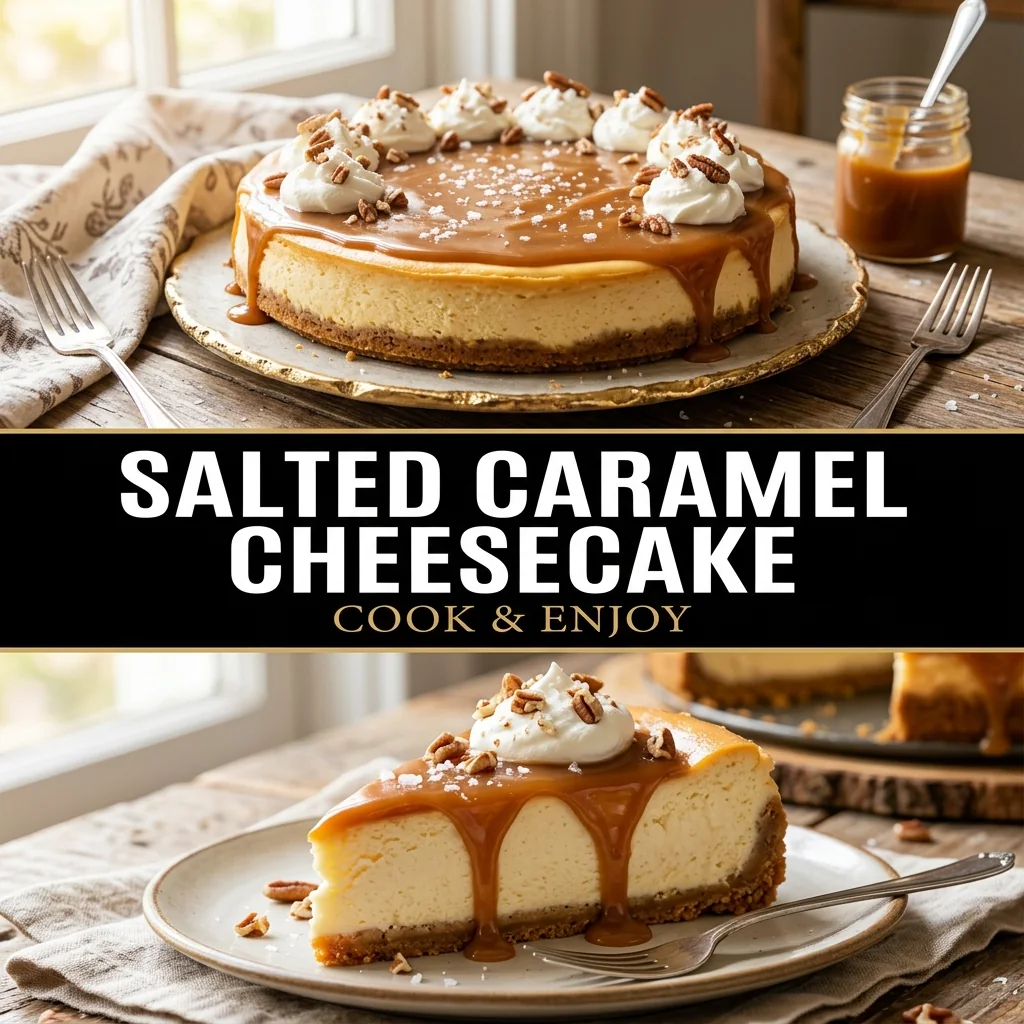
Rich, amber caramel balanced by mineral-rich sea salt transforms a traditional cheesecake into an exceptional centerpiece dessert. This composition utilizes spiced speculoos biscuits for the foundational crust, introducing notes of cinnamon, nutmeg, and caramelized beet sugar that harmonize with the dairy filling. The cheesecake batter itself replaces a significant portion of standard white sugar with moisture-rich light brown sugar, imbuing the custard with a subtle molasses undertone. After a low, steamy bake and an extended refrigeration cycle, the chilled cake is crowned with a decadent layer of scratch-made salted caramel sauce and finished with crunchy flakes of sea salt for textural and savory contrast.
Dry Versus Wet Caramel Safety
Preparing homemade caramel requires careful thermal management. The dry caramel method melts pure sugar directly in a heavy pan without adding water. This technique eliminates the risk of recrystallization along pan walls, producing a cleaner, faster syrup. However, hot melted sugar exceeds 340°F (171°C) and will sputter vigorously when room-temperature butter and heavy cream are whisked in. Utilize a deep saucepan to prevent boil-overs, step back as the steam billows, and whisk steadily until the mixture calms into a cohesive, mirror-smooth emulsion.
Moisture Control with Speculoos Crusts
Speculoos biscuits contain caramelized sugar and vegetable shortening or butter, making them considerably more crumbly and absorbent than traditional graham crackers. When constructing the base, monitor the butter ratio carefully; excess fat causes the crust to become excessively hard and greasy once refrigerated. The pre-baking step is vital because it melts the sugars within the cookie crumbs, fusing them into a solid, moisture-resistant barrier that remains remarkably crisp under the weight of the rich brown-sugar custard layer above.
Thermally Regulated Cooling Protocols
Cheesecakes rich in brown sugar and sour cream possess dense colloidal structures sensitive to thermal shock. Removing the pan directly from a hot oven to cool room air triggers rapid contraction of the surface proteins, resulting in broad central fractures. Permitting the cake to rest inside the turned-off oven with the door propped slightly open allows the internal temperature to decline slowly from 150°F (66°C) toward room temperature. This gradual thermal ramp down stabilizes the egg network, ensuring an unblemished, level surface.
Before you start
When making the dry caramel sauce, watch the color closely. As soon as the sugar turns a deep copper-amber color, remove it from the heat immediately before adding the butter and heavy cream. Residual pan heat will continue to darken the caramel, and waiting even ten seconds too long can turn sweet toffee into a bitter, acrid sauce.
THE RECIPE
Salted Caramel Cheesecake
12 servings · 40 minutes preparation · 80 minutes cooking · 540 minutes cooling, chilling or resting
Ingredients
Step-by-step instructions
- Preheat the oven to 350°F (175°C). Grease a 9-inch (23 cm) springform pan and line the interior bottom base with parchment paper. Securely wrap the bottom and outer sides with two tight sheets of heavy-duty foil to waterproof the pan.
- Mix the speculoos cookie crumbs with the melted butter in a small bowl until evenly moistened. Press the crumbs firmly into an even, compact layer across the base of the springform pan. Bake at 350°F (175°C) for 10 minutes, then cool on a wire rack.
- Reduce the oven temperature to 325°F (165°C). In a large stand mixer bowl with the paddle attachment, beat the cream cheese, packed brown sugar, granulated sugar, and cornstarch on medium-low speed for 3 minutes until smooth and completely free of lumps.
- Add the sour cream, vanilla extract, and fine sea salt. Mix on low speed for 1 minute until completely homogeneous, pausing to scrape down the bottom and sides of the mixing bowl with a rubber spatula.
- Add the eggs one at a time, mixing on the lowest speed setting just until the yolk disappears into the batter before adding the next. Pour the batter over the cooled speculoos crust, smoothing the top surface evenly with an offset spatula.
- Place the springform pan in a large roasting pan, then pour boiling water into the outer pan until it reaches halfway up the springform's sides. Bake at 325°F (165°C) for 60 to 70 minutes until edges are set and center gently wobbles.
- Turn off the oven, prop the oven door open with a wooden spoon, and allow the cheesecake to cool slowly in the oven for 60 minutes. Remove to a wire rack to cool for no more than 1 hour, then chill in the refrigerator for at least 7 hours.
- Prepare the caramel: melt 200 grams of granulated sugar in a heavy saucepan over medium heat, stirring gently once liquid begins forming, until completely melted into a clear deep-amber syrup reaching roughly 350°F (177°C).
- Remove saucepan from heat; immediately whisk in the cubed butter until melted, then slowly pour in the heavy cream while whisking constantly. Cool completely; the measured fine sea salt is already in the batter. The flaky salt is added at serving. Pour caramel over chilled cheesecake, sprinkle with flaky sea salt, and slice.
Kitchen notes
When making the dry caramel sauce, watch the color closely. As soon as the sugar turns a deep copper-amber color, remove it from the heat immediately before adding the butter and heavy cream. Residual pan heat will continue to darken the caramel, and waiting even ten seconds too long can turn sweet toffee into a bitter, acrid sauce.
Storage & make-ahead
Store the finished cheesecake in an airtight container in the refrigerator for up to 5 days. For best results, add the flaky sea salt garnish shortly before serving, as moisture in the refrigerator will dissolve the salt crystals over extended storage. Freeze un-carameled slices wrapped in foil up to 2 months.
An original recipe guide inspired by themes in our Pinterest research. Recipe has not been independently kitchen-tested. AI-generated image is illustrative; your finished dish may look different.
Frequently asked questions
Can I pour warm caramel onto the chilled cheesecake?
No. Pouring warm caramel onto a chilled cheesecake will melt the top layer of dairy fat, resulting in a cloudy, greasy barrier and a messy cut. Allow the caramel sauce to cool completely to room temperature before spreading it across the top.
Why did my caramel sauce turn grainy?
Graininess occurs when undissolved sugar crystals reseed the hot syrup, initiating crystallization. Avoid stirring early during the sugar melt; simply swirl the pan gently over the burner. Once butter and cream are whisked in smoothly, the caramel will remain silken.
Can I use graham crackers instead of speculoos cookies?
Yes, an equal weight of traditional graham cracker crumbs works seamlessly. To capture a similar spiced warmth, add one-half teaspoon of ground cinnamon and a pinch of ground ginger or nutmeg to the crumb and melted butter mixture.