WHY MAKE IT
A little comfort, a lot of flavor.
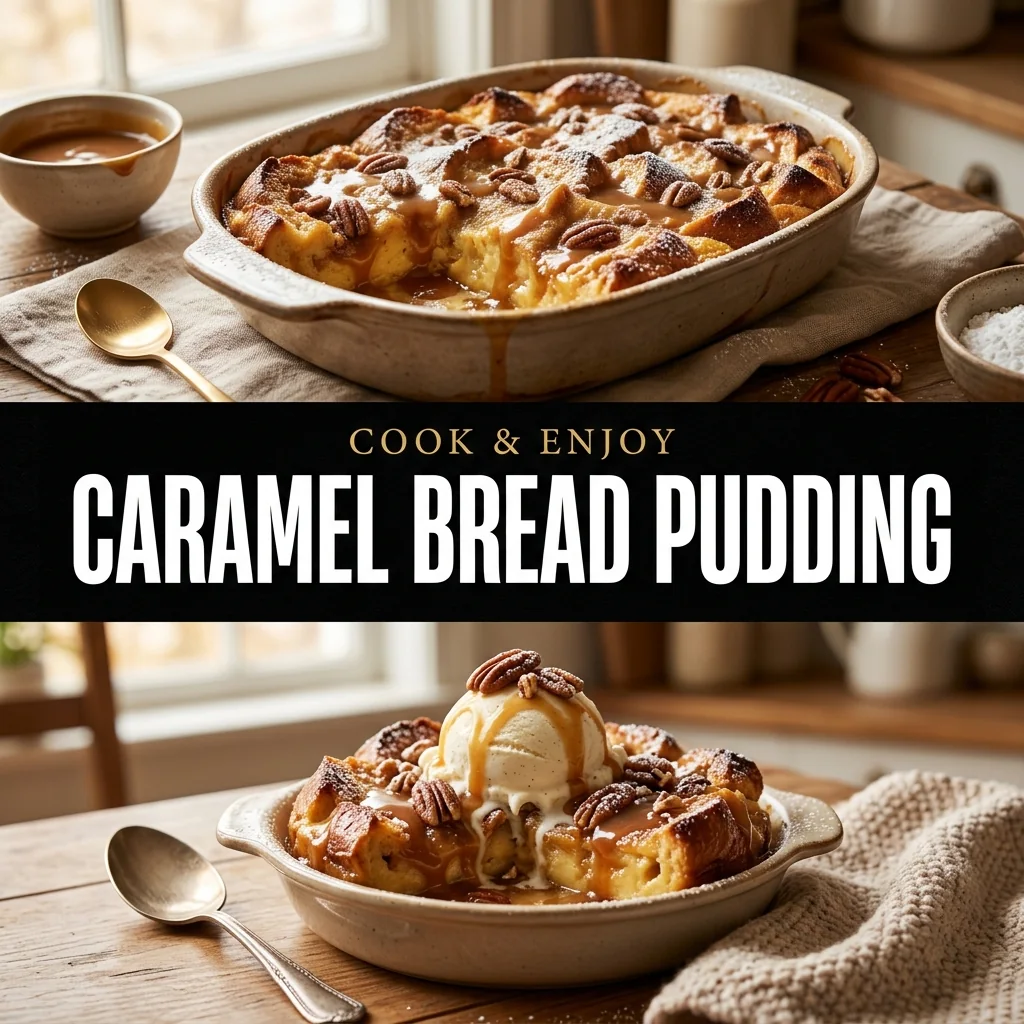
Caramel bread pudding elevates humble bread scraps into a luxurious, restaurant-caliber dessert centered around classic baking chemistry. Rich, enriched breads such as brioche or challah possess a tight yet tender crumb that drinks in an eggy custard without disintegrating into a soggy porridge. Infusing the custard base with dark brown sugar yields deep molasses undertones, which are amplified tenfold by a finishing glaze of homemade salted caramel sauce. Baking the soaked cubes at a gentle moderate temperature ensures that the internal custard cooks evenly to a delicate, quivering set while the exposed bread points turn delightfully crisp and caramelized. It is an impressive, comforting dessert ideal for relaxed dinner gatherings.
Bread Selection and Texture
The foundation of an exceptional bread pudding lies in using enriched, high-fat bread like brioche, challah, or Portuguese sweet bread. These loaves contain eggs and butter within their dough, contributing rich flavor and structural resilience. Lean breads such as baguettes or sourdough have large, irregular air pockets and chewy crusts that fail to absorb custard uniformly, often leaving tough patches. Slicing the bread into uniform 1-inch cubes and lightly toasting them drives off water weight, leaving open capillaries ready to drink up the caramel cream without dissolving into mush.
The Science of the Custard
The custard ratio here relies on a balance of whole milk, heavy cream, whole eggs, and supplemental egg yolks. Adding extra yolks provides lecithin, a natural emulsifier that delivers a velvety mouthfeel and prevents liquid weeping during baking. Dark brown sugar provides moisture and a faint acidity that softens the egg proteins, keeping the set tender rather than rubbery. Whisking the custard thoroughly before pouring guarantees that spices and salt distribute evenly throughout the bread cubes rather than settling onto the bottom of the baking dish.
Managing Caramelization
Cooking caramel by melting dry granulated sugar requires attentiveness. Use a stainless steel or light-colored saucepan to accurately monitor color shifts from pale champagne to deep copper. As soon as the sugar reaches an amber hue, remove it from direct heat to incorporate the butter and cream. Residual pan heat continues cooking the sugar, so stopping early prevents burnt bitterness. The addition of flaked sea salt provides sharp mineral contrast that cuts through the intense richness of the butterfat and concentrated sugars.
Before you start
Drying the bread in the oven is vital for texture; fresh, damp bread turns mushy upon absorbing custard, whereas dried bread cubes act like structural sponges that retain their shape while becoming saturated. When preparing the caramel sauce, warm your heavy cream slightly in the microwave before pouring it into the caramelized sugar; cold cream causes the hot melted sugar to seize into hard, stubborn candy crystals.
THE RECIPE
Caramel Bread Pudding
8 servings · 25 minutes preparation · 50 minutes cooking · 30 minutes cooling, chilling or resting
Ingredients
Step-by-step instructions
- Preheat your oven to 325°F (165°C). Spread the 1-inch brioche cubes in a single layer across two large rimmed baking sheets and bake for 10 to 12 minutes until dry to the touch but not deeply browned, then let cool for 5 minutes.
- Grease an 8x11-inch or 9x13-inch ceramic baking dish with butter. Transfer the toasted brioche cubes into the dish, gently pressing them down to form an even, interlocking bed of bread.
- In a large bowl, vigorously whisk together the 4 whole eggs, 2 egg yolks, dark brown sugar, whole milk, 1 cup of heavy cream, vanilla extract, ground cinnamon, and 1/4 teaspoon of flaked sea salt until the sugar dissolves and the custard is completely smooth.
- Pour the custard evenly over the brioche cubes in the baking dish. Gently compress the bread with the back of a large spatula to encourage full absorption, then let the pudding rest unbaked at room temperature for 20 minutes to soak.
- Bake the bread pudding at 325°F (165°C) on the middle oven rack for 45 to 50 minutes until puffed, golden brown on top, and a knife inserted into the center emerges clean with no uncooked custard running into the slit.
- While the pudding bakes, make the sauce: heat 1/2 cup granulated sugar in a heavy saucepan over medium heat, swirling occasionally until melted into a clear amber syrup. Whisk in 4 tablespoons butter until melted, then slowly stream in the remaining 1/2 cup heavy cream and remaining 1/4 teaspoon flaked salt; simmer 1 minute.
- Remove the baked bread pudding from the oven and rest it on a wire rack for 10 minutes. Drizzle half of the warm caramel sauce across the surface, reserving the remaining sauce to serve alongside warm squares.
Kitchen notes
Drying the bread in the oven is vital for texture; fresh, damp bread turns mushy upon absorbing custard, whereas dried bread cubes act like structural sponges that retain their shape while becoming saturated. When preparing the caramel sauce, warm your heavy cream slightly in the microwave before pouring it into the caramelized sugar; cold cream causes the hot melted sugar to seize into hard, stubborn candy crystals.
Storage & make-ahead
Cover cooled bread pudding tightly with foil and store in the refrigerator for up to 4 days. Reheat the entire dish covered at 325°F (165°C) for 15 to 20 minutes, or warm individual squares in the microwave for 45 seconds. Store leftover caramel sauce in a sealed glass jar in the refrigerator for up to 2 weeks; gently reheat in 15-second microwave bursts before spooning over slices.
An original recipe guide inspired by themes in our Pinterest research. Recipe has not been independently kitchen-tested. AI-generated image is illustrative; your finished dish may look different.
Frequently asked questions
Can I assemble this bread pudding the night before?
Yes. Assemble the dish, cover tightly with foil, and refrigerate overnight. Before baking, let the dish sit on the counter for 25 to 30 minutes to take the chill off, then bake as directed, adding 5 minutes if the center is still cold.
Can I use half-and-half instead of milk and heavy cream?
You can substitute half-and-half for the combined milk and cream in the custard portion. However, use pure heavy whipping cream for the stovetop caramel sauce, as the lower fat content in half-and-half can cause the caramel to curdle or turn thin.
How do I know when the custard center is fully cooked?
The pudding is done when the center puffs slightly and feels springy to the touch. A thin paring knife inserted into the middle should come out moist but without milky, uncooked custard pooling in the cut. Internal temperature should register 175°F to 180°F (79°C to 82°C).