WHY MAKE IT
A little comfort, a lot of flavor.
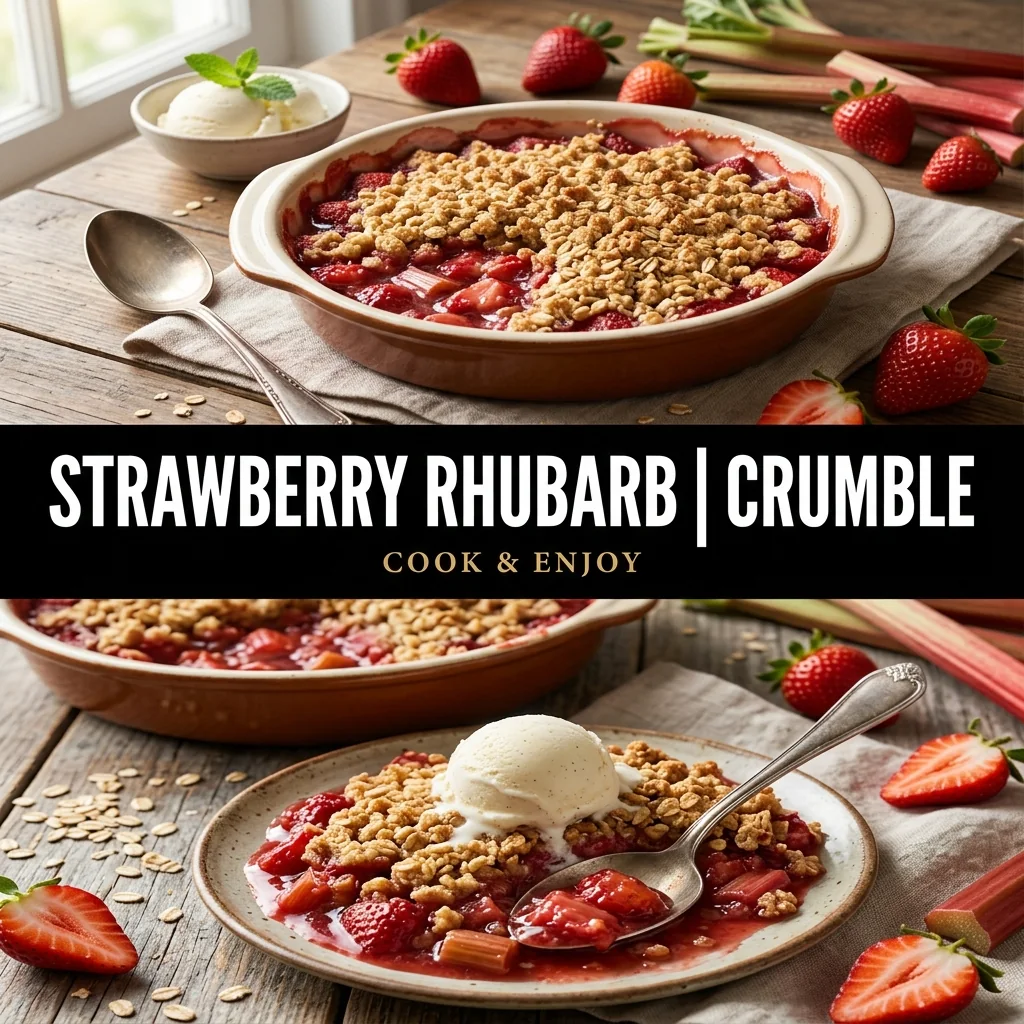
Strawberry rhubarb crumble highlights one of baking's most enduring seasonal pairings: the assertively tart snap of crisp garden rhubarb softened by the fragrant, mellow sweetness of ripe strawberries. While pies demand intricate pastry crusts that can become waterlogged by wet fillings, a deep-dish crumble accommodates fruit juices with ease beneath a thick, textured blanket of toasted oats and butter. A small addition of ground ginger sharpens the fruit profile, cutting through rich brown sugar without masking the produce. Baked until bubbling and richly browned, this dish delivers an appealing contrast between crunchy topping and silken, tangy compote that represents home baking at its most approachable and rewarding.
Moisture Management in Fruit Bakes
Strawberries and rhubarb both carry high water contents that release rapidly once cell walls collapse under oven heat. Cornstarch acts as the critical binder, swelling and trapping released water into a clear, luscious glaze. Slicing rhubarb into uniform half-inch pieces guarantees that it cooks to tenderness in the exact timeframe required for strawberries to soften without disintegrating completely. Sugar draws initial juices outward during the brief resting phase before baking, which dissolves the starch evenly and prevents chalky dry clumps from forming within the finished dessert.
Crafting the Ideal Oat Crumble
The crumble topping relies on cold butter to maintain distinct, craggy textures through the baking cycle. Working butter into dry ingredients by hand leaves small pockets of fat surrounded by flour and rolled oats. When baked, the water within these butter pockets evaporates into steam, creating delicate flakiness while melting fat toasts the oats and caramelizes brown sugar. Using rolled oats instead of quick-cooking oats preserves chew and structural grit, preventing the topping from melting into a paste and ensuring a satisfying textural barrier over the softened fruit.
Serving and Flavor Pairing Options
Serving temperature influences the perceived balance of acidity and sweetness in rhubarb dishes. When piping hot, fruit acidity tastes sharper; allowing the crumble to rest for 25 minutes balances the palate and thickens the sauce. This dessert pairs naturally with cold dairy components, such as a scoop of classic vanilla bean ice cream, lightly sweetened crème fraîche, or chilled pouring cream. The dairy fats coat the tongue, tempering the tangy rhubarb bite while enriching the buttery oat clusters with every bite.
Before you start
Resist shortening the post-bake rest. Fruit crumbles depend on starch gelatinization to achieve a thickened, spoonable consistency rather than a soupy liquid. The cornstarch in the fruit base must boil vigorously in the oven to fully activate, indicated by slow, thick bubbling along the edges. Allowing the dessert to stand undisturbed on a wire cooling rack for at least 25 minutes drops the temperature just enough for the fruit juices to stabilize and cling perfectly to the spoon.
THE RECIPE
Strawberry Rhubarb Crumble
6 servings · 20 minutes preparation · 45 minutes cooking · 25 minutes cooling, chilling or resting
Ingredients
Step-by-step instructions
- Preheat the oven to 350°F (175°C). Grease a 9-inch square ceramic or glass baking dish with a light coating of butter or nonstick cooking spray.
- Toss the prepared rhubarb, quartered strawberries, granulated sugar, cornstarch, fresh lemon juice, pure vanilla extract, and ground ginger together in a large mixing bowl until the fruit is glossy and no dry starch pockets remain.
- Transfer the fruit mixture into the prepared 9-inch baking dish, spreading it in an even layer across the base using a spatula, and set aside while preparing the crumble.
- Combine the old-fashioned rolled oats, all-purpose flour, light brown sugar, ground cinnamon, and fine sea salt in a medium bowl, whisking until thoroughly blended and free of brown sugar lumps.
- Add the chilled butter cubes to the dry oat mixture. Work the butter into the dry ingredients using a pastry blender or clean fingertips until irregular clusters form, ranging from pea-sized bits to small marbles.
- Scatter the oat topping evenly over the strawberry-rhubarb filling, covering the fruit completely right up to the interior edges of the baking dish without packing the crumbs down tightly.
- Bake at 350°F (175°C) on the center oven rack for 45 minutes until the topping is deeply golden brown and fruit juices bubble vigorously around the perimeter. Rest on a wire rack for 25 minutes before serving warm.
Kitchen notes
Resist shortening the post-bake rest. Fruit crumbles depend on starch gelatinization to achieve a thickened, spoonable consistency rather than a soupy liquid. The cornstarch in the fruit base must boil vigorously in the oven to fully activate, indicated by slow, thick bubbling along the edges. Allowing the dessert to stand undisturbed on a wire cooling rack for at least 25 minutes drops the temperature just enough for the fruit juices to stabilize and cling perfectly to the spoon.
Storage & make-ahead
Cool the baked crumble completely, cover tightly with foil or transfer portions to airtight containers, and refrigerate within 2 hours of baking. Leftovers keep well in the refrigerator for up to 4 days. Reheat individual portions in an oven-safe dish at 350°F (175°C) for 12 to 15 minutes until steaming and heated through to an internal temperature of 165°F (74°C). Avoid freezing, as the fruit loses its cellular texture upon thawing.
An original recipe guide inspired by themes in our Pinterest research. Recipe has not been independently kitchen-tested. AI-generated image is illustrative; your finished dish may look different.
Frequently asked questions
Can I use frozen rhubarb and frozen strawberries?
Yes, frozen fruit works well without thawing first. Add an additional half tablespoon of cornstarch to handle extra moisture and increase total bake time by 5 to 10 minutes until thick bubbling occurs throughout the center.
Why did my crumble turn out watery?
A watery crumble usually occurs if the dish was underbaked or cut too quickly. The filling must bubble vigorously in the oven to fully activate cornstarch, followed by 25 minutes of resting to allow juices to set.
Can I substitute quick oats for rolled oats?
Quick oats can be substituted in an equal volume, but they will yield a softer, less textured topping. Rolled oats are preferred for their rustic chew and ability to retain crispness against rising steam.